DIY vs Professional Plumbing: What You Can Do Yourself
Some plumbing jobs are straightforward DIY repairs. Others require a licensed plumber by law. Here's exactly how to tell the difference.
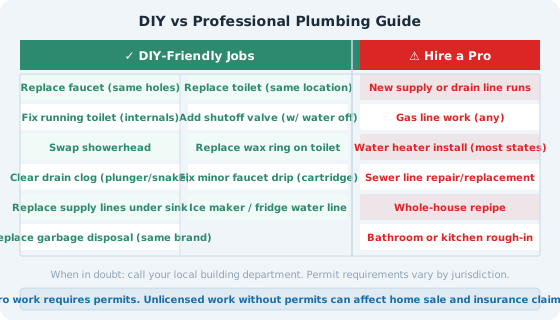
Quick Answer
Replacing a faucet, fixing a running toilet, or swapping a showerhead: DIY-friendly. Running new supply or drain lines, anything involving the main shutoff, gas lines, or work requiring a permit: hire a licensed plumber.
The line between DIY and professional plumbing isn't arbitrary. It's based on what can cause serious damage or code violations if done wrong. Water damage is expensive. Gas leaks are dangerous. Unpermitted work can affect your home's value and insurability. Understanding where the line is saves you money on the right jobs and protects you on the wrong ones.
What Homeowners Can Safely DIY
These repairs and replacements are within reach for a handy homeowner with basic tools and the ability to follow instructions:
Toilet internals: Replacing a flapper, fill valve, flush handle, or toilet seat. These are entirely above the floor, require no pipe work, and can be completed with a wrench in under 30 minutes. Parts cost $10-$40.
Faucet replacement: Swapping a kitchen or bathroom faucet for a new one (same location, same number of holes). Turn off the supply valves under the sink, disconnect the supply lines, remove the old faucet, install the new one. Two hours for most people, no special tools needed.
Showerhead replacement: Unscrew the old one, clean the threads, use plumber's tape, screw on the new one. 10 minutes.
Running toilet repairs: Most running toilets are caused by a failed flapper ($8 part) or an improperly adjusted fill valve. YouTube tutorials handle this well.
Unclogging drains: A plunger handles most clogs. A hand snake ($25-$50) handles deeper ones. Chemical drain cleaners are a last resort. They work for organic clogs but can damage pipes and shouldn't be used regularly.
Garbage disposal replacement: If you're replacing a disposal with the same brand (same mounting assembly), it's a 20-minute job. Different brand, different mounting ring: still manageable but slightly more involved.
Supply line replacement under sink: The braided stainless flex lines that connect shutoff valves to faucets. Under $20 in parts, 15 minutes to replace.
What Requires a Licensed Plumber
New supply or drain line runs. Running pipe through walls, floors, or ceilings requires knowledge of proper venting, slope requirements, and code-compliant materials. Incorrectly vented drain lines allow sewer gas into the home. This work also requires a permit in all jurisdictions.
Water heater installation. Most municipalities require licensed plumbers to install water heaters. Even where it's technically legal for homeowners to install their own, the permit and inspection process exists because a poorly installed water heater can cause carbon monoxide issues, explosions, or major water damage.
Anything involving gas lines. Gas line work is strictly regulated. Leaks kill people. Licensed plumbers and gas fitters have the training, tools, and legal authority to do this work safely. Most states adopt standards from the International Code Council that specifically require licensed installers for fuel gas piping. Don't attempt this yourself.
Sewer line work. Any work on the lateral (the pipe from your home to the street) requires a permit and licensed contractor in virtually all jurisdictions.
Whole-house repipe. Requires permits, inspection, and the expertise to make hundreds of properly sealed connections.
Any work that requires opening a wall for pipe access in a wet area. Water damage in a finished wall from a failed connection can cost tens of thousands of dollars. The labor savings from DIY aren't worth the risk on hidden work.
The Gray Zone: What Depends on Your State
Some work falls in the middle, legal to DIY in some states but restricted in others:
Toilet replacement: Replacing the entire toilet is DIY-legal in most states (it's a fixture swap, not new pipe work). Some municipalities require permits even for toilet replacements. Check your local code.
Water heater like-for-like swap: Homeowner installation is legal in many states for an identical replacement in the same location. Permits still apply in most places. If you're changing fuel type (electric to gas or vice versa), hire a pro.
Outdoor hose bib: Adding or replacing an outdoor faucet varies widely by state.
When in doubt, call your local building department. They'll tell you whether a permit is required and whether homeowner work is allowed. They're not there to catch you. They're there to help you understand the rules.
The Real Cost of Unpermitted Work
Skipping permits feels like a money-saver until you sell your home. Home inspectors routinely identify unpermitted work. When they do, you either have to disclose it (which reduces the sale price), retroactively permit it (expensive and sometimes requires opening walls), or fail to disclose it (legal liability).
Homeowner's insurance may also deny claims for damage caused by unpermitted plumbing work. A $200 permit fee is cheap insurance against those outcomes.
Read our complete guide to plumbing permits to understand exactly when you need one.
Estimate the Cost of Going Professional
Before deciding whether to DIY, know what professional work actually costs. Use our plumbing cost estimator to get a realistic price for your project, then decide whether the savings justify the time, effort, and risk of doing it yourself.
For a faucet replacement that takes a plumber 45 minutes at $100/hr: $75 in labor plus parts. Doing it yourself saves $75 and takes you 2 hours, including two hardware store trips. That's your break-even calculation.
For a water heater that takes a plumber 3 hours at $100/hr plus a $150 permit: $450 in labor plus permit. Doing it yourself (where legal) saves $450 and takes you half a day, plus the permit process and inspection coordination. Worthwhile for some; not for others. If you're swapping to a high-efficiency model, check EPA WaterSense rebates before you start, as utility incentives can offset labor costs either way.
Regional Cost Variations
DIY math changes by market because pro labor rates do. In Mississippi, Alabama, and rural Texas, licensed plumbers bill $60-$90/hr. A faucet swap runs $75-$130 installed. DIY saves maybe $50 on a two-hour job, often not worth the hardware store trips.
In Los Angeles, Seattle, and New York, the same plumbers bill $150-$225/hr. That faucet swap now costs $200-$350 installed. DIY savings jump to $175+. The higher the local labor rate, the more a handy homeowner gains by tackling simple fixture work themselves.
State licensing rules also shift the equation. Illinois, Massachusetts, and Louisiana restrict most plumbing work to licensed professionals even for minor jobs. California and Arizona allow broader homeowner work on owner-occupied properties. Florida falls in the middle: homeowners can pull their own permits but must pass a basic competency exam in some counties. Check your state board before starting any job that touches a wall or permit-triggering fixture.
Frequently Asked Questions
What plumbing can a homeowner legally do?
Most states allow homeowners to replace fixtures, fix leaks, clear drains, and swap faucets or toilets in their own primary residence. Work on new supply lines, drain runs, gas piping, or sewer laterals usually requires a licensed plumber regardless of who owns the home. Rules vary by state and even city. Call your building department for specifics.
Does DIY plumbing void my home warranty?
It can. Home warranty companies often deny claims on DIY installations that later fail. If you install a water heater yourself and it leaks six months later, the warranty almost certainly won't cover the damage or the replacement. Manufacturer warranties on fixtures typically stay valid, but labor warranty on installation goes away.
Will DIY plumbing affect my home insurance?
If DIY work causes a loss, insurers routinely deny the claim when the work violated code or required a permit you didn't pull. A $40,000 water damage claim from an unpermitted DIY water heater install? Denied. Work that's legal for homeowners and done to code is generally fine.
What's the most expensive DIY plumbing mistake?
Hidden leaks in wall or ceiling connections. A $3 compression fitting installed wrong behind drywall can run $15,000-$40,000 in water damage, mold remediation, and rebuild costs by the time you find it. Second place: drain lines with improper slope or venting, which cause recurring backups and sewer gas.
When should I always call a pro?
Gas lines, water heater installs in most jurisdictions, anything requiring a permit, any work inside walls or ceilings, and anything you're not 100% confident about. The cost of getting it right is always less than the cost of fixing water damage from a bad DIY connection.
Ready to estimate your plumbing project?
Use the Free Estimator →