How Much Does a Plumber Cost in 2025?
Plumber costs range from $75 for a service call to $10,000+ for major work. Here's what drives the price and what you should expect to pay.
Quick Answer
Plumbers charge $75-$150 for a service call plus $65-$160 per hour depending on where you live. Most residential jobs run $200-$600. Emergency and after-hours work adds 50-75% to the base rate.
Plumbing quotes can feel like a mystery. One contractor says $350, another says $750 for the same job. That gap isn't random; it reflects real differences in overhead, licensing, and experience. Understanding how plumbers set their prices helps you evaluate quotes instead of just guessing.
How Plumbers Charge
Most residential plumbers use one of two pricing models: time and materials or flat-rate pricing.
With time and materials, you pay an hourly rate plus the cost of parts. The meter starts when the plumber arrives (or sometimes when they leave their shop) and stops when the work is done. This model is common for repair calls where the scope is hard to predict.
Flat-rate pricing sets a fixed price per job type, for example "$350 to replace a toilet," "$275 to clear a main drain." You know what you'll pay before the work starts. Many homeowners prefer this because there are no surprises, though a very simple job might cost you more than it would under hourly billing.
Typical Plumber Hourly Rates by Region
According to Bureau of Labor Statistics occupational wage data and PHCC contractor surveys, here's what plumbers charge per hour across US markets:
- Low-cost markets (rural South, rural Midwest): $65-$85/hr
- Average markets (Midwest cities, Southeast cities): $85-$110/hr
- High-cost markets (Northeast, West Coast cities): $110-$140/hr
- Premium markets (NYC, San Francisco, Los Angeles, Boston): $140-$175/hr
These are rates for licensed journeyman and master plumbers. An apprentice working under supervision might bill less, but master plumber sign-off is required for permitted work in most states.
Use our plumbing cost estimator to calculate a full project estimate based on your region and job type.
Service Call Fees
Most plumbers charge a service call or diagnostic fee just for showing up, typically $75-$150. This covers travel time and the first 30-60 minutes on site. If you hire them for the work, this fee is usually applied toward the total. If you get the diagnosis and go elsewhere, you pay the service fee.
Always ask whether the service call fee is waived if you proceed with the repair. Most plumbers say yes, but it's worth confirming before you call.
Cost by Job Type
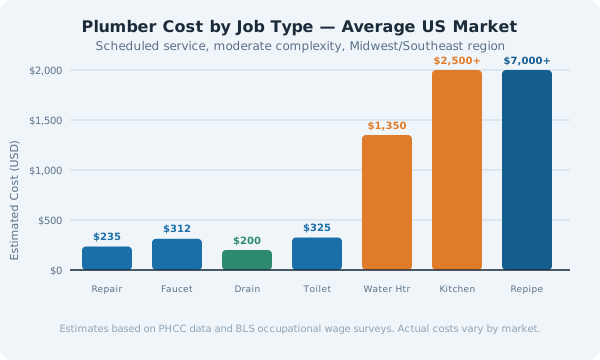
Here's what homeowners actually pay for common plumbing work, based on average US market rates:
| Job | Typical Cost |
|---|---|
| Leaky faucet repair | $120-$250 |
| Running toilet fix | $100-$200 |
| Drain cleaning | $100-$300 |
| Toilet replacement | $200-$450 |
| Faucet installation | $175-$350 |
| Water heater replacement | $900-$1,800 (tank) |
| Bathroom rough-in | $2,000-$5,500 |
| Whole-house repipe | $4,000-$10,000 |
For a more precise estimate, enter your specific job details into our plumber cost calculator.
What Makes Plumbing Jobs More Expensive
Several factors push the final bill above the base estimate:
Access difficulty. A faucet under a sink takes 20 minutes. The same faucet behind a finished tile wall takes 3-4 hours. Limited access is the biggest hidden cost driver in residential plumbing.
Older homes. Homes built before 1980 may have galvanized steel pipes (which corrode), polybutylene pipes (prone to failure), or cast-iron drain lines. Working with these materials takes longer and may require more parts.
Permit requirements. Many jurisdictions require permits for new installations, repipes, and water heater replacements. Permits add $50-$400 to the job and require a scheduled inspection. Some plumbers handle this for you; others leave it to the homeowner.
Material costs. Copper pipe has risen to $3-$5 per linear foot. A simple supply line that cost $80 in materials a few years ago might run $140 now. Most plumbers pass material costs through at list price or with a modest markup (10-20%).
Getting a Fair Price
Get written estimates from at least two licensed plumbers for any job over $500. Ask each one to itemize labor hours and materials separately. If one quote is significantly lower, ask what's different. Sometimes it's a better price, sometimes it's a shorter scope that will generate change orders.
Check licensing at your state contractor licensing board. In most states, plumbers must be licensed to do permitted work. A lower quote from an unlicensed contractor isn't worth the risk if the work is discovered during a home sale or insurance claim. The Plumbing-Heating-Cooling Contractors Association keeps a directory of vetted contractors if your state board is hard to search.
Read our guide on when to DIY vs. hire a professional plumber to understand which jobs are safe to tackle yourself.
Regional Cost Variations
Where you live changes the bill more than any other single factor. Labor rates track the cost of living, and so do permit fees, parts markups, and shop overhead. Here's what a standard 2-hour faucet installation runs in different metros:
| City | Typical 2-Hour Job Cost |
|---|---|
| Birmingham, AL | $180-$240 |
| Kansas City, MO | $210-$280 |
| Denver, CO | $240-$330 |
| Boston, MA | $290-$400 |
| San Francisco, CA | $320-$460 |
Three things push coastal and Northeast cities higher. Licensed plumbers in those markets carry more insurance because liability claims are more expensive. Union shops are common in the Northeast and set a wage floor that non-union shops have to compete with. And dense urban areas mean longer drive times between jobs, which plumbers bake into their hourly rate. Rural Southern markets run the opposite way, with lower insurance costs, shorter drive distances, and more independent one-truck operations keeping overhead down.
Frequently Asked Questions
Is the service call fee waived if I hire the plumber?
Most plumbers apply the $75-$150 service call fee toward the total if you authorize the repair during the same visit. A few shops keep it separate, so ask before they roll up. If you get a diagnosis and want to shop the quote, expect to pay the fee in full.
Why do plumbers charge so much?
Labor is only part of the bill. A licensed plumber pays $3,000-$8,000 a year for liability insurance, $500-$2,000 for licensing and continuing education, plus truck payments, fuel, tools, and shop overhead. By the time a $110/hr rate clears all that, take-home pay is closer to $35-$45/hr.
Do plumbers give free estimates?
Free estimates are standard for large jobs like repipes, water heater swaps, or bathroom remodels where the plumber wants to win the bid. Diagnostic visits for repairs almost always carry a fee because the plumber has to actually find the problem before quoting a fix.
What's the cheapest way to hire a plumber?
Schedule non-emergency work during weekday business hours, bundle multiple small jobs into one visit, and have the workspace cleared before they arrive. You'll save on after-hours fees, extra trip charges, and billable time spent moving your stuff.
Do I tip a plumber?
Tipping isn't expected for licensed trade work. A $10-$20 tip for an exceptional emergency call or a cold drink on a hot day is appreciated but never required.
The Bottom Line
For most residential repairs, budget $150-$450. For installs and renovations, $500-$2,000 is common. Major work like repiping or sewer line replacement runs $3,000-$10,000+. Emergency calls after hours cost 50-75% more than scheduled work. Get quotes, check licenses, and ask for itemized estimates before authorizing any work.
Ready to estimate your plumbing project?
Use the Free Estimator →