Emergency Plumber Costs: What to Expect
Emergency plumbers charge $150-$300/hr after hours. Here's what a midnight plumber call actually costs, when to call, and how to keep the bill manageable.
Quick Answer
Emergency plumbers charge 50-75% more than standard rates. Expect $150-$300/hr after hours plus a $150-$300 service call fee. A burst pipe repair at 2 AM typically runs $450-$1,200 total depending on the damage.
Water damage compounds fast. A burst pipe loses 8 gallons per minute. A failed water heater can flood a basement in hours. These aren't situations where you wait for a Monday morning callback, but they're also situations where you're vulnerable to paying a lot more than you should.
What Emergency Rates Look Like
Emergency plumbing rates are whatever the market bears after hours, and that varies widely. The Plumbing-Heating-Cooling Contractors Association tracks industry pricing trends, and after-hours premiums have climbed roughly 15% since 2022. Here's what to expect:
- After-hours service call fee: $150-$300 (on top of labor)
- Emergency hourly rate: $125-$250/hr (vs. $65-$140/hr during normal hours)
- Weekend premium: 25-50% above normal weekday rates
- Holiday premium: 50-75% above normal rates
Use our emergency plumbing cost calculator. Select "Emergency/After Hours" in the Service Timing field to see how emergency rates affect your specific job type.
What Counts as a True Emergency
Some plumbing issues are urgent but not emergencies. A running toilet is annoying; you can wait until morning. A slow drain is inconvenient; same. True emergencies are situations where waiting causes ongoing property damage:
Call immediately (true emergencies):
- Burst or split pipe actively discharging water
- Sewage backing up into the home
- Water heater leaking onto the floor
- Gas smell in the home (call your gas company first, then a plumber)
- Flooding that won't stop when the main shutoff is turned
Can wait until morning:
- Slow or clogged drains (no backup, no overflow)
- Running toilet
- Dripping faucet
- Low water pressure (no burst, no leak)
- Water heater not heating (but not leaking)
The difference matters because "waiting until morning" can save you $200-$400 in emergency rates on a typical repair.
What to Do Before the Plumber Arrives
When you have a water emergency, the first move is always to shut off the water, not call a plumber.
Locate your main shutoff. In most homes, it's in the basement, crawl space, utility room, or near the water meter. Turn it clockwise to close. Know where this is before you need it.
For a localized issue (burst under a sink, water heater leak), there's usually a shutoff valve right at the fixture or appliance. Use that first so you don't shut off the whole house.
Once water is stopped, the emergency has been partly contained. You can then call a plumber, mop up accessible water, and move valuables out of the affected area. If the water was running for a while, document the damage with photos for insurance.
How to Minimize Emergency Costs
Have a plumber in mind before an emergency. The worst time to search for a plumber is at 11 PM with water running across your floor. Keep a card from a reliable local plumber. If you've had work done recently, you already have a relationship. Call them first.
Ask about the full cost upfront. A reputable plumber will tell you the service call fee and hourly rate before they come out. If they can't or won't give you a number, call someone else.
Describe the situation accurately. If you tell the plumber it's a burst pipe and it turns out to be a leaking faucet, the emergency rate often still applies because they dispatched accordingly. Be honest about what you're dealing with.
Get the water stopped before they arrive. If you've already shut the water off and contained the situation, some plumbers will quote the job as a standard repair rather than an active emergency once they assess it on site.
Typical Emergency Repair Costs
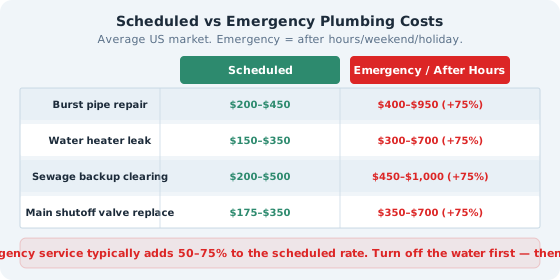
Here's what homeowners pay for common emergency plumbing calls in average US markets (scheduled vs. emergency rates):
| Job | Scheduled | Emergency |
|---|---|---|
| Burst pipe repair | $200-$450 | $400-$950 |
| Water heater leak | $150-$350 | $300-$700 |
| Sewage backup clearing | $200-$500 | $450-$1,000 |
| Main shutoff valve replacement | $175-$350 | $350-$700 |
| Toilet overflow clog | $100-$250 | $200-$500 |
These figures assume a single-technician response and 1-2 hours of labor. Major damage requiring multiple crew members or extended repair time costs proportionally more.
When Homeowner's Insurance Covers It
Most homeowner's insurance covers sudden and accidental water damage (like a burst pipe) but not gradual leaks. If a pipe fails suddenly and causes water damage, your homeowner's policy likely covers the damage to your home (flooring, walls, belongings) but may or may not cover the plumbing repair itself.
Call your insurance company's claims line promptly. Document everything. Keep all receipts from emergency repairs, as insurers typically require proof of mitigation efforts.
Regional Cost Variations
Emergency rates swing hard by metro. In New York City and Boston, a 2 AM burst pipe visit runs $500-$1,500 for the first two hours. The trip fee alone hits $250-$400 because plumbers factor in drive time, tolls, and parking. San Francisco and Seattle sit in similar territory thanks to licensing requirements and traffic.
Mid-sized markets like Phoenix, Nashville, and Kansas City run $300-$750 for the same job. Lower labor costs and faster response times drop the bill. The BLS wage data shows plumber median wages in these markets run 25-35% below coastal cities.
Rural markets get expensive for a different reason: distance. If the nearest emergency plumber is 45 minutes away, expect a $200-$300 trip charge plus hourly rates from the moment they leave the shop. Small-town service areas also have fewer 24/7 providers, which limits your leverage on price. Cold-climate cities like Minneapolis and Buffalo see surge pricing during winter freeze events when burst-pipe calls overwhelm local capacity.
Frequently Asked Questions
What counts as a plumbing emergency?
A true emergency means ongoing property damage if you wait. Burst pipes, active sewage backups, water heater leaks flooding the floor, and flooding you can't stop at the main shutoff all qualify. A clogged toilet in a two-bathroom house at 10 PM doesn't. It can wait until 7 AM and save you $300.
Can I negotiate emergency plumber rates?
Sometimes. If you've already shut off the water and contained the situation, ask whether the plumber can quote the job at standard rates since it's no longer actively flooding. Reputable shops will adjust. New customers have less leverage than repeat clients, which is another reason to have a go-to plumber before you need one.
Do plumbers charge more on weekends?
Yes. Saturday rates typically run 25-50% above weekday rates. Sunday and holidays climb to 50-75% above. A $125/hr weekday plumber often charges $200-$220/hr on a Sunday, plus a $150-$250 trip fee. The clock starts when they leave the shop.
What's the average cost of a weekend plumber call?
Expect $350-$800 for a standard weekend repair lasting 1-2 hours. Burst pipes with water damage push $600-$1,200. Major sewage backups requiring drain equipment run $700-$1,500. These totals include the trip fee, labor, and basic parts.
Should I wait until morning to save money?
Only if waiting doesn't cause more damage. A dripping faucet, running toilet, or slow drain? Wait. A leak soaking your drywall or a water heater dumping into the basement? Call now. The $300-$500 you save on rates disappears fast against $5,000 in water-damage repairs.
Read our guide on what factors affect plumbing costs for more on standard vs. premium rate differences.
Ready to estimate your plumbing project?
Use the Free Estimator →