Gas Line Installation Cost: What Homeowners Pay
Gas line installation costs $300-$2,000 for most residential jobs. Here's what affects the price and why this is never a DIY project.
Quick Answer
Adding a gas line to a new appliance costs $300-$800 for a short run from an existing line. Running a completely new gas line from the meter to an appliance 40-60 feet away runs $800-$2,000. All gas work requires a licensed plumber or gas fitter and a permit.
Gas line work sits in a category of its own: it's plumbing work, but the consequences of mistakes are far more severe than a water leak. A natural gas leak can cause explosions, fires, and carbon monoxide poisoning. This is never a DIY project, full stop. But understanding what it costs and what affects the price helps you evaluate quotes and plan your budget.
Gas Line Cost by Job Type
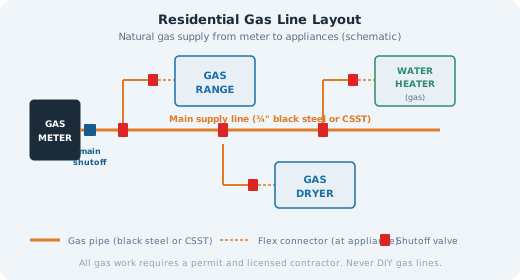
New appliance connection (existing nearby gas line): $300-$700. If a gas line already runs within 5-10 feet of the new appliance location, a plumber taps into the existing line, runs a new branch, and installs the shutoff valve and flex connector. A gas dryer, gas range, or gas fireplace insert in a standard location falls into this category.
New gas line run (no nearby existing line): $600-$2,000. When the appliance is far from any existing gas line, or when adding gas to a location that was previously all-electric, the plumber runs new steel or flexible corrugated stainless steel (CSST) pipe from the nearest point on the existing system.
Gas line repair (leak repair or segment replacement): $300-$1,000 depending on access and the extent of the repair.
Whole-house gas line upgrade: When adding multiple new gas appliances or increasing the overall demand on the system, the main line from the meter and the distribution manifold may need upsizing. This is a larger project, typically $1,500-$4,000+ depending on home size.
Use our gas line cost estimator: select "Gas Line Installation" to get a regional estimate.
What Affects Gas Line Cost
Run length. The primary cost driver. Steel pipe costs $2-$4 per linear foot installed; CSST runs $2-$5 per linear foot. A 10-foot run costs much less than a 60-foot run.
Pipe material. Black steel pipe is the traditional standard: durable, code-compliant everywhere, requires threaded fittings at every connection. CSST (corrugated stainless steel tubing) is flexible, faster to install in tight spaces, and now common in residential applications, but some jurisdictions restrict its use or require additional bonding per NFPA 54 guidelines. Your plumber will know what's required locally.
Access. Running pipe through finished walls and ceilings is more labor-intensive than running it through an open basement or utility room. A gas line through a finished living space may require drywall cutting and patching (separate cost).
Permit and pressure test. All gas line work requires a permit, and the final inspection includes a pressure test of the new lines to verify there are no leaks. This isn't optional; it's your protection. Budget $75-$200 for the permit.
Gas Line Safety: What You Need to Know
Every gas line installation requires a shutoff valve at the appliance. This allows the appliance to be disconnected safely for maintenance or replacement without shutting off the whole house.
Flex connectors (the yellow or stainless corrugated connection between the gas line and the appliance) should be replaced whenever an appliance is moved or replaced. Old flex connectors can crack, especially if they've been kinked.
If you smell gas: Leave the building immediately, don't operate any electrical switches, and call your gas utility from outside. They provide 24/7 emergency response at no charge to locate and shut off leaks. Call a plumber after the utility has made the situation safe.
CO detectors should be installed in any home with gas appliances. Carbon monoxide is odorless and can accumulate from appliance combustion issues, not just gas leaks.
Regional Cost Variations
Gas line pricing varies by labor market, permit fees, and local code requirements. Some cities require additional bonding, seismic strapping, or earthquake valves that push costs higher.
Los Angeles and San Francisco: $700-$1,500 for a basic appliance hookup. California seismic gas shutoff valves are required on many installs ($150-$400 added). Permit fees run $150-$400.
New York and Boston: $800-$2,000 for short runs because of union labor, strict inspection requirements, and access challenges in multi-family housing. Master plumber sign-off is required in NYC.
Houston, Dallas, Atlanta: $350-$800 for appliance hookups, $900-$1,800 for longer runs. Lower labor costs and faster permit turnaround keep prices down.
Chicago and Minneapolis: $500-$1,100 for most residential jobs. Cold-climate buildings often already have gas infrastructure, which shortens runs.
Rural areas without natural gas service: If you're on propane, the cost structure shifts: you'll pay $500-$1,500 for tank-side installations plus regulator work. Propane fitters are typically licensed separately from natural gas plumbers.
Frequently Asked Questions
Is gas line installation cheaper than electric?
For the line itself, gas and electric run similar, typically $300-$1,500 for a new appliance circuit or gas branch. Gas appliances usually cost more upfront but run cheaper month-to-month. A gas dryer saves $50-$150/year vs. electric in most markets, and gas water heaters typically beat electric on operating cost per the Department of Energy efficiency data.
Do I need a permit for a gas line?
Yes, always. Every US jurisdiction requires a permit and pressure test for gas line work. Gas code is published through the National Fuel Gas Code (NFPA 54), which every state adopts in some form. Skipping the permit creates legal and insurance liability and, more importantly, means no inspection catches mistakes that could kill you.
How much does it cost to add a gas line for a stove?
If there's an existing gas line within 10 feet of the stove location, budget $300-$600 for the branch, shutoff valve, and flex connector. If the line has to come from further away or through finished walls, expect $700-$1,500. Add $75-$200 for the permit.
Is black iron pipe or CSST better?
Both meet code when installed correctly. Black iron (threaded steel) is the traditional standard: tough, cheap, well-understood by every gas fitter. CSST is faster to install in tight spaces and better for long runs through framed walls, but requires direct bonding to the electrical system to protect against lightning strikes. Most new installs use CSST; most existing homes have black iron.
Can I install a gas line myself?
No. Every state restricts gas line work to licensed plumbers or gas fitters, and for good reason: a missed leak can kill an entire household. Even if your state technically allows homeowner permits for minor gas work, insurance won't cover damage from DIY gas installations. The $300-$800 you'd save isn't worth the risk.
Permit Requirements for Gas Work
Gas line work requires permits in every jurisdiction without exception. The permit triggers an inspection that includes a pressure test of the new lines. Gas work done without permits creates real legal and insurance risk and presents a genuine safety hazard to occupants.
Licensed plumbers and gas fitters are the only contractors legally authorized to do this work. If someone offers to run a gas line without a permit, decline.
Read our plumbing permit guide for more on the permit and inspection process. For an overview of what different types of plumbing work cost, see our complete plumber cost guide.
Ready to estimate your plumbing project?
Use the Free Estimator →