Sewer Line Repair vs Replacement Cost: What to Know
Sewer line repair costs $1,800-$5,000. Full replacement runs $3,000-$12,000. The right choice depends on pipe condition, not just the immediate problem.
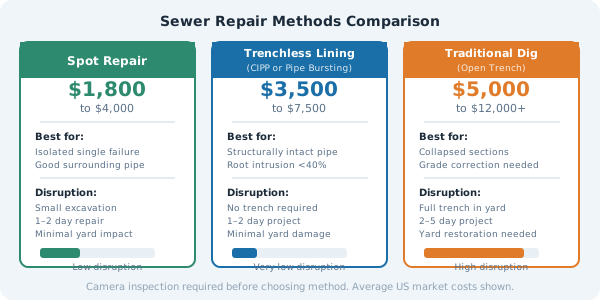
Quick Answer
Sewer line repair (spot repair or patch) costs $1,800-$5,000. Full sewer line replacement runs $3,000-$8,000 for trenchless methods and $5,000-$12,000 for traditional excavation. Camera inspection first. Always.
A sewer line problem is a homeowner's nightmare: slow drains throughout the home, sewage odor in the yard, wet spots in the lawn, or a sewage backup. These symptoms can mean a simple blockage or a failing pipe that needs full replacement. Getting a camera inspection before any repair is the only way to know what you're actually dealing with.
Repair vs. Replacement: The Decision
The choice between spot repair and full replacement depends entirely on what the camera shows.
Spot repair or pipe patching is appropriate when:
- The problem is isolated to one location
- The surrounding pipe is in good structural condition
- Tree root intrusion hasn't spread throughout the line
- The pipe material is PVC or viable clay/concrete (not heavily corroded cast iron or collapsed)
Full replacement is the right call when:
- The pipe has multiple failure points
- Root intrusion has spread through more than 30-40% of the line
- The pipe is cast iron and showing widespread corrosion
- Sections of the pipe have collapsed
- The slope is wrong (causing recurring backups regardless of blockages)
Sewer Repair Methods and Costs
Spot Repair: Excavation at the specific failure point, section replacement, backfill. Typically $1,800-$4,000 for a 3-5 foot section depending on depth and access.
Trenchless Pipe Lining (CIPP): A flexible liner coated with resin is inserted into the existing pipe and inflated, creating a new pipe inside the old one. No excavation required (or minimal). Costs $3,500-$7,000 for a typical residential sewer run. Works well if the existing pipe is structurally intact enough to line.
Trenchless Pipe Bursting: A new pipe is pulled through the old one, breaking the old pipe outward. Faster than traditional excavation and no trench needed through the yard. Costs $4,000-$7,500 for a typical residential line.
Traditional Excavation and Replacement: Open the trench, remove the old pipe, install new PVC, backfill and restore the yard. The most disruptive option but sometimes the only choice for severely collapsed pipes or when lining isn't feasible. Costs $5,000-$12,000+ depending on length, depth, and yard restoration requirements.
Use our sewer line cost estimator with "Sewer Line Repair/Replace" selected to get a cost range for your region.
The Camera Inspection: Non-Negotiable
Before any sewer repair, get a video inspection of the line. A licensed plumber runs a camera through the clean-out access point and shows you exactly what's happening inside the pipe. This costs $150-$400 and is worth every dollar. The IAPMO Uniform Plumbing Code sets the standards most inspectors follow, so a code-aware plumber already knows what they're looking for on the video.
Without a camera inspection, you're guessing, and guessing wrong on a sewer repair is expensive. A plumber who quotes a sewer repair without first running a camera is either cutting corners or will hit "unexpected complications" once they open the ground.
After the inspection, ask for a copy of the video. You own the information, and it's useful for getting second opinions.
What Affects Sewer Repair Cost
Depth. Sewer lines are typically 2-6 feet deep in residential lots, but can go deeper in cold climates (below the frost line). Every additional foot of depth adds excavation cost and safety requirements.
Length of the run. Most residential sewer laterals run 50-100 feet from the house to the municipal main. Longer runs mean more linear footage of replacement or lining.
Yard obstacles. Concrete driveways, mature tree root systems, garden beds, and landscaping all affect excavation difficulty and restoration cost. A sewer line running under a concrete driveway will cost significantly more to repair than one through open lawn.
Pipe material. Old clay tile and orangeburg (a paper-based material used mid-20th century) are common in homes built before 1970. These materials deteriorate and are not candidates for trenchless lining; they typically require full excavation and replacement with PVC.
Permits and HOA Considerations
Sewer line work always requires a permit in virtually all jurisdictions. Your city or county sewer department also needs to be notified before connecting to the municipal main. If the failure is in the section between your home and the public right-of-way, that's your responsibility. Work in the street or public right-of-way gets more complicated and may involve the municipality.
If your neighborhood has an HOA, check the covenants, as some HOAs have rules about yard restoration after excavation.
Is It Your Line or the City's?
The sewer lateral (the pipe from your house to the street) is the homeowner's responsibility in most jurisdictions. The main (in the street) is the municipality's. Where exactly the responsibility boundary is can vary by city: some municipalities own the connection at the property line, others at the public right-of-way, others at the cleanout.
When in doubt, call your municipal water and sewer department. They can run a camera from the city main to identify whether the problem is in their system or yours before you spend money on a repair.
Read our plumbing permits guide for more on the permit process for sewer work.
Regional Cost Variations
Sewer work prices swing hard by market. In Houston and Dallas, a full trenchless replacement often lands at $4,500-$7,000 thanks to sandy soil and shallow frost depths. In Minneapolis or Denver, the same job runs $7,500-$12,000 because the pipe sits 5-7 feet down to clear the frost line.
Older East Coast cities charge a premium for different reasons. Boston and Philadelphia homes often have 80-year-old clay laterals under mature trees and brick sidewalks. Expect $8,000-$15,000 when the line crosses a city-owned sidewalk, as the municipality charges for street-cut permits and sidewalk restoration separately.
California coastal cities add permit complexity. San Francisco requires a side sewer permit plus a compliance inspection at point of sale, which can push total costs past $10,000 on a standard lot. Chicago's clay soil and freeze-thaw cycles add about 20% to excavation costs compared to southern cities. Labor rates also track the Bureau of Labor Statistics plumber wage data, and markets with $40+/hr median wages charge accordingly.
Frequently Asked Questions
Who pays for sewer line repairs: homeowner or city?
The homeowner owns the lateral from the house to the property line or main connection in most cities. That's your bill. The city owns the main pipe in the street and handles repairs there at no cost to you. If the break straddles the property line, call your municipal sewer department first; they'll camera from their end and tell you where the responsibility sits.
Does homeowners insurance cover sewer line damage?
Standard policies don't cover the sewer pipe itself, only sudden water damage inside the home from a backup. You need a separate service line endorsement (usually $40-$75/year) that covers $10,000-$25,000 in sewer line repairs. Add this before you need it. Claims for pre-existing deterioration get denied.
How long does sewer line replacement take?
Trenchless lining or bursting takes 1-2 days from start to finish, including cleanup. Traditional excavation takes 3-5 days depending on depth, length, and yard obstacles. Add 1-2 extra days for inspection scheduling and final backfill.
Can I sell a house with a damaged sewer line?
Yes, but you'll take a hit. Most buyers request a sewer scope inspection during due diligence. A failing line knocks $5,000-$15,000 off the offer or kills the deal. It's usually cheaper to fix before listing than to negotiate after inspection.
Is trenchless or traditional repair better?
Trenchless is better when the existing pipe is intact enough to line: no collapses, no severe belly. It's faster, cheaper on restoration, and saves your landscaping. Traditional excavation is the right call for collapsed pipes, wrong slope, or pipe materials that can't be lined like orangeburg.
Ready to estimate your plumbing project?
Use the Free Estimator →